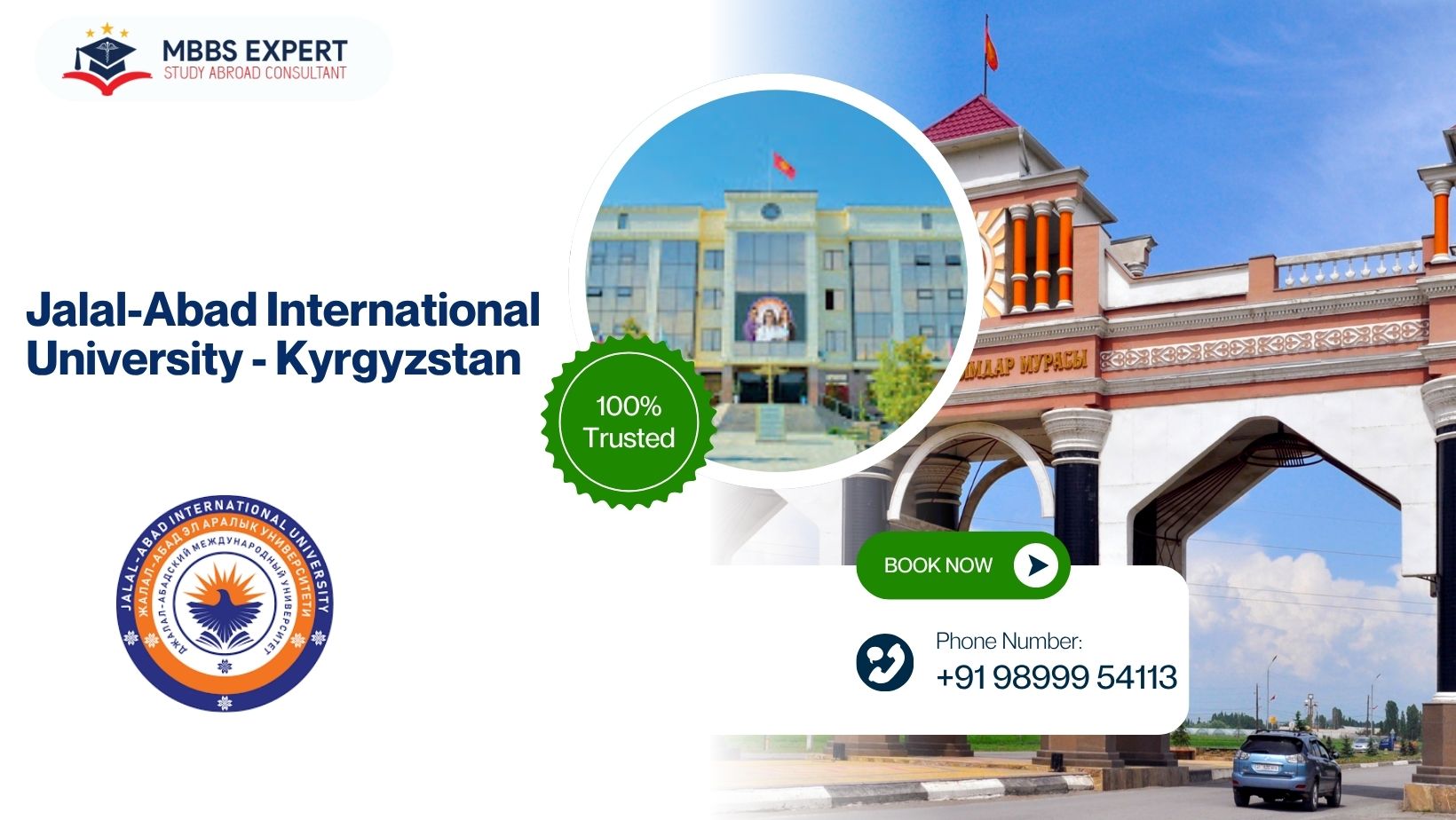
Jalal-Abad International University (JAIU) A Gateway to Quality Global Education in Kyrgyzstan Introduction In today’s…

Don’t Opt for MBBS Abroad | The Hidden Truth About MBBS Abroad

Don’t Opt for MBBS Abroad | The Hidden Truth About MBBS Abroad
Call for Guidance: MBBSEXPERT – 9899954113
Don’t Opt for MBBS Abroad | The Hidden Truth About MBBS Abroad – Choosing a career in medicine is one of the most prestigious and noble decisions a student can make. Every year, lakhs of students in India appear for NEET with the dream of becoming doctors. However, due to limited government medical seats and high private college fees, many students and their parents look towards an alternative option: MBBS abroad.
On the surface, MBBS abroad may seem like an attractive opportunity – low fees, promises of global exposure, and seemingly “easy” admissions without high NEET cut-offs. But the hidden truth about MBBS abroad tells a very different story. Thousands of students return every year with shattered dreams, wasted money, and uncertain futures.
In this blog, we at MBBSEXPERT (9899954113) will reveal why you should not opt for MBBS abroad and why you must think twice before falling for misleading advertisements and false promises.
1. The Illusion of “Affordable” Fees Abroad
One of the biggest marketing tricks used by foreign medical universities (and their agents) is the claim that MBBS abroad is “cheap.” They often compare their fees with Indian private colleges and present them as highly affordable.
But here’s the reality:
-
While tuition fees may look low initially, universities charge hidden costs such as donations, examination fees, insurance charges, and compulsory hostel/mess charges.
-
Cost of living in foreign countries (food, travel, accommodation outside campus) is much higher than in India.
-
Currency fluctuations further increase the financial burden. For example, a rise in USD or Ruble exchange rates can instantly make your fees more expensive.
By the end of 6 years, the total cost of MBBS abroad often crosses 40–60 lakhs, almost equal to or sometimes more than Indian private medical colleges.
2. Language Barrier – The Silent Killer of Dreams
Many students believe that MBBS abroad will be taught in English. While the brochures may claim this, the practical reality is different:
-
In class, some professors switch to their native language, making it difficult for Indian students to grasp concepts.
-
Patients in hospitals (where students do clinical rotations) speak only the local language. This means Indian students cannot interact with patients, limiting their practical exposure.
-
Learning a new language (like Russian, Mandarin, or Ukrainian) takes years, and even then, medical terms don’t translate easily.
This leads to half-baked medical knowledge and students graduating without proper clinical training.
3. Quality of Education & Infrastructure – A Big Question Mark
While some top universities abroad may have good facilities, the majority of Indian students are sent to low-ranked universities with poor infrastructure, outdated labs, and insufficient patient flow.
-
Practical training is minimal compared to Indian government colleges.
-
Exposure to tropical diseases (very common in India) is missing abroad. Students return to India having never seen or treated cases like malaria, dengue, or tuberculosis.
-
Faculty in some universities is underqualified or unavailable, leaving students to self-study.
In short, students get a degree on paper but not the skills required to be competent doctors.
4. The FMGE/NExT Reality Check
The biggest challenge for MBBS abroad graduates is passing the Foreign Medical Graduate Examination (FMGE), now being replaced by the NExT exam in India.
Here’s the shocking truth:
-
FMGE pass percentage is only 10–20% every year. This means 8 out of 10 students returning from abroad fail to qualify as doctors in India.
-
The reason is obvious: lack of quality training abroad, language issues, and poor exposure to Indian clinical conditions.
-
Even those who clear FMGE struggle in practicals because their foundation is weak.
Imagine spending 6 years abroad and 40+ lakhs, only to return and fail in the licensing exam. Sadly, this is the story of thousands of Indian students every year.
5. Safety Concerns & Cultural Shock
Studying abroad isn’t just about academics. Students face serious safety and cultural issues:
-
Racism, bullying, and discrimination against Indian students are common in certain countries.
-
Crime rates in some regions put students at risk, especially girls.
-
Extreme weather conditions (–20°C winters in Russia/Ukraine or scorching summers in Kazakhstan) make survival difficult.
-
Food habits abroad are completely different, making it hard for Indian students to adjust.
Instead of focusing on studies, many students struggle just to survive.
6. Recognition Issues with Foreign Degrees
Even if you manage to complete MBBS abroad, here’s another bitter truth:
-
Not all foreign medical universities are recognized by the National Medical Commission (NMC) in India.
-
Some universities lose recognition midway, leaving students stranded.
-
Even if recognized, the degree holds no value in India unless you clear FMGE/NExT.
In other words, a foreign MBBS degree is not your final ticket to becoming a doctor in India.
7. False Promises by Agents
Many students land abroad because of the misleading promises made by agents and consultants. They often claim:
-
“No NEET required” (which is false – NEET qualification is mandatory even for MBBS abroad).
-
“100% passing guarantee in FMGE” (completely false – no one can guarantee this).
-
“Scholarships available for all” (reality: only a handful get them).
-
“International exposure and jobs abroad” (truth: most countries don’t allow foreigners to practice without further exams).
Agents earn huge commissions by trapping students and parents in this web of lies.
8. Emotional & Psychological Burden
Studying MBBS abroad often becomes an emotional nightmare:
-
Students feel isolated, homesick, and depressed.
-
The pressure of clearing FMGE after 6 years is mentally exhausting.
-
Parents feel cheated after spending their lifetime savings and seeing no returns.
Many students give up midway, returning without completing their degrees. Some even switch careers, wasting years of their lives.
9. Alternatives to MBBS Abroad
Instead of rushing abroad, students have better options in India itself:
-
Re-attempt NEET: Many students crack NEET on their 2nd or 3rd attempt with proper guidance. A government MBBS seat in India is far better than any foreign degree.
-
Allied Health Sciences: Courses like BDS, BAMS, BHMS, BPT, Nursing, and Pharmacy also offer respectable and rewarding careers.
-
Paramedical & Research Fields: There are multiple healthcare careers apart from MBBS that have great scope in India.
With the right career counselling, students can avoid the trap of MBBS abroad and still build a bright future in the medical field.
10. Why Trust MBBSEXPERT (9899954113)?
At MBBSEXPERT, we have counseled thousands of students and parents over the years. We’ve seen the real struggles of students who went abroad and regretted their decisions later.
We believe in honest guidance – not luring students into risky pathways for profit. Our mission is to:
-
Educate students about the hidden risks of MBBS abroad.
-
Provide the right strategies to crack NEET and secure seats in India.
-
Help explore alternative medical careers if MBBS is not possible.
-
Save parents from wasting crores of rupees on useless degrees.
When you call us at 9899954113, you will get practical advice, career clarity, and genuine mentorship.
Conclusion – Think Twice Before Going Abroad
The hidden truth about MBBS abroad is clear:
-
It’s not as cheap as it looks.
-
Education quality is questionable.
-
Language and cultural barriers ruin learning.
-
FMGE/NExT pass percentage is shockingly low.
-
Emotional, financial, and career risks are extremely high.
Instead of chasing shortcuts, focus on long-term planning and smart career decisions. Remember, becoming a doctor is not just about getting a degree – it’s about acquiring the right skills, knowledge, and experience to save lives.
Don’t let false promises ruin your dreams. Don’t fall into the MBBS abroad trap.
👉 For personalized career counselling, call MBBSEXPERT – 9899954113 today and secure your future the right way.
NMC Guidelines for MBBS Abroad: What Every Indian Student Must Know
The National Medical Commission (NMC) is the highest regulatory authority for medical education in India. For students planning to pursue MBBS abroad, NMC has laid down strict rules and eligibility conditions to ensure quality education and patient safety. Unfortunately, many students ignore these details and later face problems with recognition, exams, and licensing in India.
Here’s a clear breakdown of NMC’s latest guidelines:
1. NEET Qualification Is Mandatory
Before you take admission in any foreign medical university, you must clear NEET in India.
-
The NEET score acts as your Eligibility Certificate.
-
Without NEET, your MBBS degree from abroad will not be valid in India.
-
The NEET result is valid for three years, so you can use it for admission in the following academic sessions as well.
2. Course Duration and Structure
NMC has standardized the structure of MBBS abroad so that it matches Indian norms:
-
Minimum 54 months (4.5 years) of classroom and clinical training.
-
Compulsory 12-month internship, preferably in the same medical college abroad.
-
The entire program must be taught in English—no shortcuts or bilingual teaching.
-
Students must finish the degree within 10 years of joining.
This rule was framed because many universities earlier offered shorter or poorly designed courses.
3. Screening Test After Graduation
Just completing MBBS abroad doesn’t make you a doctor in India. After returning, you must:
-
Clear the Screening Test (currently FMGE, later to be replaced by NExT).
-
Only after clearing this exam can you apply for registration with NMC and legally practice medicine in India.
👉 Note: Graduates from USA, UK, Canada, Australia, and New Zealand with recognized postgraduate degrees are exempted from this test.
4. Compulsory Internship in India
Even if you complete an internship abroad, NMC requires you to do a Compulsory Rotating Medical Internship (CRMI) in India.
-
This internship must be done in an NMC-approved hospital.
-
Normally, it is 12 months long, but in some cases (like students who studied partly online during COVID), it can extend up to 2 years.
This ensures foreign medical graduates gain exposure to Indian patients and diseases.
5. Recognition of Foreign Universities
Not every foreign medical university is acceptable for Indian students.
-
The college must meet NMC’s academic and clinical standards.
-
NMC does not publish a permanent list of “approved universities.” Instead, it is the student’s responsibility to check whether the university meets all guidelines before taking admission.
-
Recently, NMC has warned against some unrecognized institutions in Uzbekistan and Belize, clarifying that degrees from these colleges will not be valid in India.
6. Accountability of Foreign Universities
To increase accountability, NMC has proposed that foreign universities seeking recognition in India must pay a regulatory fee of USD 10,000 (~₹8.6 lakh) per student. This is meant to ensure compliance and discourage low-quality institutions from targeting Indian students.
7. Transition from FMGE to NExT
Currently, foreign medical graduates must clear FMGE to practice in India. However, in the coming years, FMGE will be replaced by the National Exit Test (NExT).
-
NExT will serve as a common exam for both Indian and foreign graduates.
-
Passing NExT will be mandatory for getting your medical license and for applying to postgraduate courses in India.
Quick Summary
| Requirement | NMC Rule |
|---|---|
| Before Admission | NEET qualification is compulsory |
| Course Duration | 4.5 years study + 1-year internship |
| Medium of Instruction | English only |
| Completion Time | Within 10 years |
| After Graduation | Must clear FMGE/NExT |
| Internship in India | 12–24 months CRMI |
| Foreign College | Must meet NMC standards; not all are valid |
Final Word
The NMC has made these guidelines to protect students and maintain medical standards in India. If you are planning MBBS abroad, you must:
-
Verify that the university follows all NMC rules.
-
Be mentally prepared to pass FMGE/NExT after returning.
-
Understand that shortcuts don’t work—quality medical education takes time, effort, and the right environment.
📞 For authentic counselling and expert advice, contact MBBSEXPERT at 9899954113 before making such a life-changing decision.
Related Posts