MBBS in Philippines 2027: American-Style Medical Education and Admission Guide MBBS in the Philippines is…
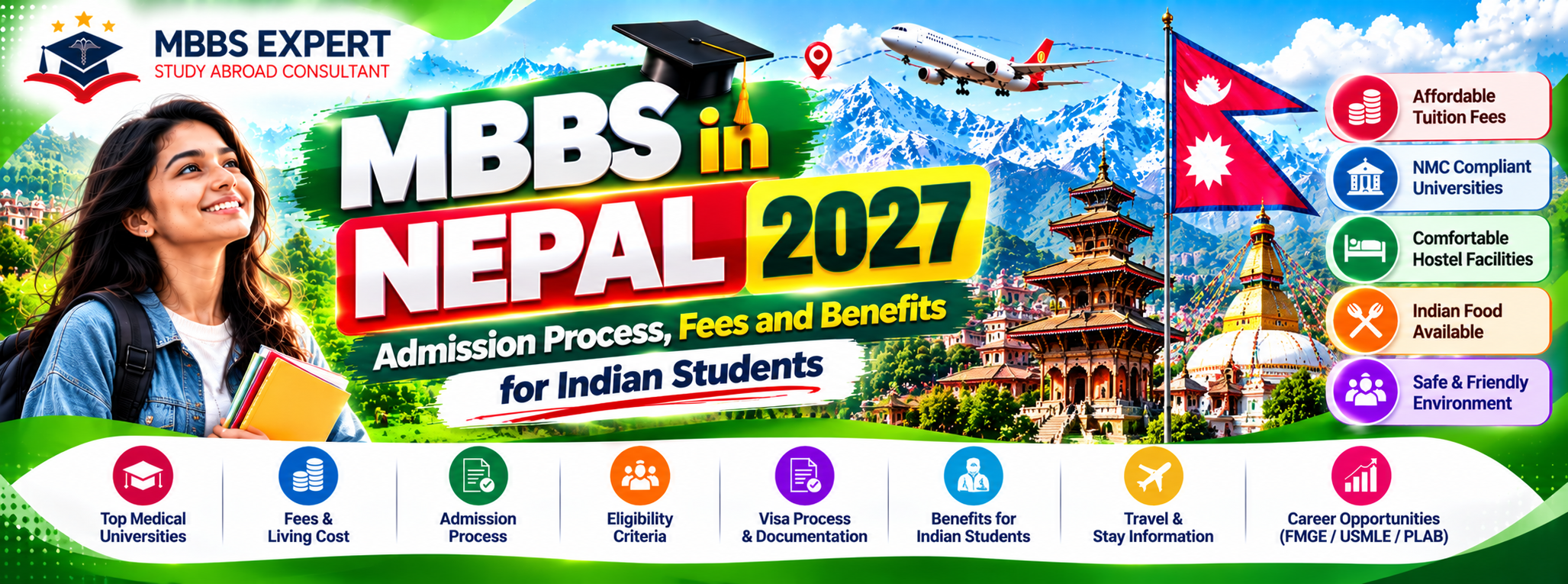
MBBS in Nepal 2027: Admission Process, Fees and Benefits for Indian Students

MBBS in Nepal 2027: Admission Process, Fees and Benefits for Indian Students
MBBS in Nepal 2027 is an attractive option for Indian students who want to pursue a medical degree in a neighbouring country with cultural similarities, geographical convenience, and familiar living conditions. Nepal offers medical education through universities and affiliated medical colleges that provide academic instruction, laboratory training, and clinical exposure in teaching hospitals. For Indian students, studying in Nepal can also mean easier travel between home and college and greater familiarity with food, languages, and traditions.
However, choosing a medical college requires careful research into tuition fees, admission requirements, clinical facilities, and the rules applicable to medical graduates returning to India. Students should verify the latest official admission notifications and recognition requirements before paying any fees or confirming a seat.
Why Choose MBBS in Nepal in 2027?
Nepal is a popular destination for Indian students because of its proximity to India and established medical education system. The country offers undergraduate medical programmes through recognised institutions, subject to the applicable national regulations.
The following factors make Nepal worth considering:
- Geographical proximity: Students can travel to Nepal from several Indian cities by road or air, making visits home more convenient.
- Cultural familiarity: Similar food preferences, festivals, customs, and social traditions can help Indian students adjust to daily life.
- English-medium instruction: Many medical colleges use English for academic teaching, although students must learn local languages or communication practices to interact effectively with patients.
- Clinical learning: Teaching hospitals provide opportunities to observe patient care and develop practical medical skills under supervision.
- Familiar food options: Indian meals and vegetarian food may be available in college hostels or nearby establishments, depending on the location.
- Regional environment: Students can experience a different healthcare system without moving to a distant continent.
- Family accessibility: Compared with destinations farther from India, Nepal can make family visits and travel planning easier.
These advantages vary by institution, so students should compare individual colleges rather than assuming every medical school offers the same facilities.
Eligibility Criteria for MBBS in Nepal 2027
Indian students must satisfy the eligibility requirements established by the relevant Nepalese authorities, the admitting university, and India’s medical education regulations.
Generally, applicants should meet the following conditions:
- Complete Class 12 or an equivalent qualification with Physics, Chemistry, Biology or Biotechnology where applicable, and English.
- Meet the prescribed minimum qualifying marks in the relevant subjects under the applicable admission rules.
- Satisfy the minimum age requirement, generally 17 years by the prescribed date.
- Qualify NEET-UG when required under Indian regulations for Indian students seeking to study medicine abroad and later practise in India.
- Meet the entrance examination and merit requirements specified by the relevant Nepalese admission authority or university.
- Submit valid academic records, identity documents, and other certificates requested during admission.
Eligibility criteria and entrance examination arrangements may change for the 2027 intake. Students should confirm the current rules through official notices instead of relying exclusively on previous years’ admission procedures.
MBBS Admission Process in Nepal 2027
The admission process usually involves several stages. The precise procedure depends on the institution, the applicable entrance examination, and the admission category.
Step 1: Research medical colleges
Shortlist colleges based on academic reputation, teaching hospitals, clinical exposure, faculty, tuition fees, accommodation, and student support services. Check the institution’s current status and the qualification it awards.
Step 2: Verify eligibility
Confirm that you meet the academic, age, entrance examination, and other requirements for the 2027 intake. Indian students should also verify the latest National Medical Commission requirements for foreign medical education.
Step 3: Complete the required entrance examination
Follow the admission authority’s instructions regarding the applicable medical entrance examination, registration, examination dates, and qualifying criteria. Do not assume that every college follows an identical admission route.
Step 4: Apply through the authorised channel
Submit the application to the relevant university, admission authority, or officially authorised portal. Enter personal and academic information accurately and observe application deadlines.
Step 5: Participate in counselling or selection
Depending on the admission system, eligible candidates may be considered through merit lists, counselling, seat allocation, or other prescribed selection procedures.
Step 6: Complete document verification
Provide the required certificates and supporting documents. These may include Class 10 and 12 marksheets, passport or other accepted identification, NEET-UG scorecard, photographs, and entrance examination records.
Step 7: Confirm admission
Review the official admission letter, tuition schedule, refund policy, hostel arrangements, and other charges before making payment. Obtain receipts for all transactions.
Step 8: Prepare for enrolment
Complete the college’s registration and medical fitness formalities, if required, and arrange accommodation and travel before the academic session begins.
MBBS Fees in Nepal for Indian Students in 2027
The total cost of MBBS in Nepal varies significantly according to the medical college, university, admission category, and applicable fee regulations. Students should not assume that all colleges charge the same amount or that a published tuition figure represents the complete cost of studying medicine.
The main expenses include:
| Expense category | What students should check |
| Tuition fees | Official programme fee and payment schedule |
| Admission charges | Registration and one-time institutional fees |
| Hostel fees | Room type, facilities, and annual charges |
| Food expenses | Mess charges or independent food costs |
| Books and equipment | Textbooks, medical instruments, and learning materials |
| Examination fees | University examinations and other academic charges |
| Personal expenses | Transport, communication, and daily necessities |
| Travel costs | Travel between India and Nepal |
Before applying, request a written fee structure directly from the college or university for the 2027 intake. Confirm whether the quoted amount covers the entire programme or only a particular year, semester, or academic component. Also ask about annual increases, deposits, refund conditions, and compulsory additional charges.
Students should compare the total expected cost over the complete medical programme rather than choosing a college solely because its initial tuition appears affordable.
Course Duration and Curriculum
The curriculum commonly covers foundational medical sciences, clinical subjects, patient examination, diagnostic methods, and supervised hospital-based training. Students progressively study areas such as anatomy, physiology, biochemistry, pathology, pharmacology, microbiology, community medicine, medicine, surgery, paediatrics, and obstetrics and gynaecology.
Clinical rotations help candidates understand patient assessment, treatment planning, medical ethics, and communication. The quality of practical learning depends on the college’s teaching facilities, hospital patient load, supervision, and opportunities for hands-on training within permitted responsibilities.
Recognition and NMC Requirements for Indian Students
Recognition and eligibility are essential considerations when choosing MBBS in Nepal. Indian students intending to practise in India after graduating must check the current National Medical Commission regulations applicable to foreign medical qualifications.
Before admission, verify the institution, degree, course duration, medium of instruction, clinical training, internship arrangements, and other requirements under the rules in force. Students should not assume that admission to a medical college automatically guarantees eligibility for registration in India.
They should also confirm the applicable requirements for qualifying NEET-UG, completing any required screening or licensing examination, and obtaining registration after graduation. Requirements can change, so official NMC notifications should take priority over promotional claims made by consultants or third parties.
Career Opportunities After MBBS in Nepal
After completing their degree and meeting the relevant licensing and registration requirements, graduates may explore medical career opportunities in Nepal, India, or other countries, subject to each country’s regulations.
Possible pathways include postgraduate medical education, hospital-based clinical practice, research, public health, and further professional training. Indian graduates planning to practise in India must satisfy the applicable examination, internship, and registration requirements. Those considering another country should separately verify its licensing examinations, language requirements, immigration rules, and postgraduate admission criteria.
Related Posts